480 Acres of Crop Land Will Now Grow Alzheimer's Research
Arnold Swanberg left his crop land to The Weissman Hood Institute at Touro University, the former McLaughlin Research Institute, to support Alzheimer's research in his hometown.
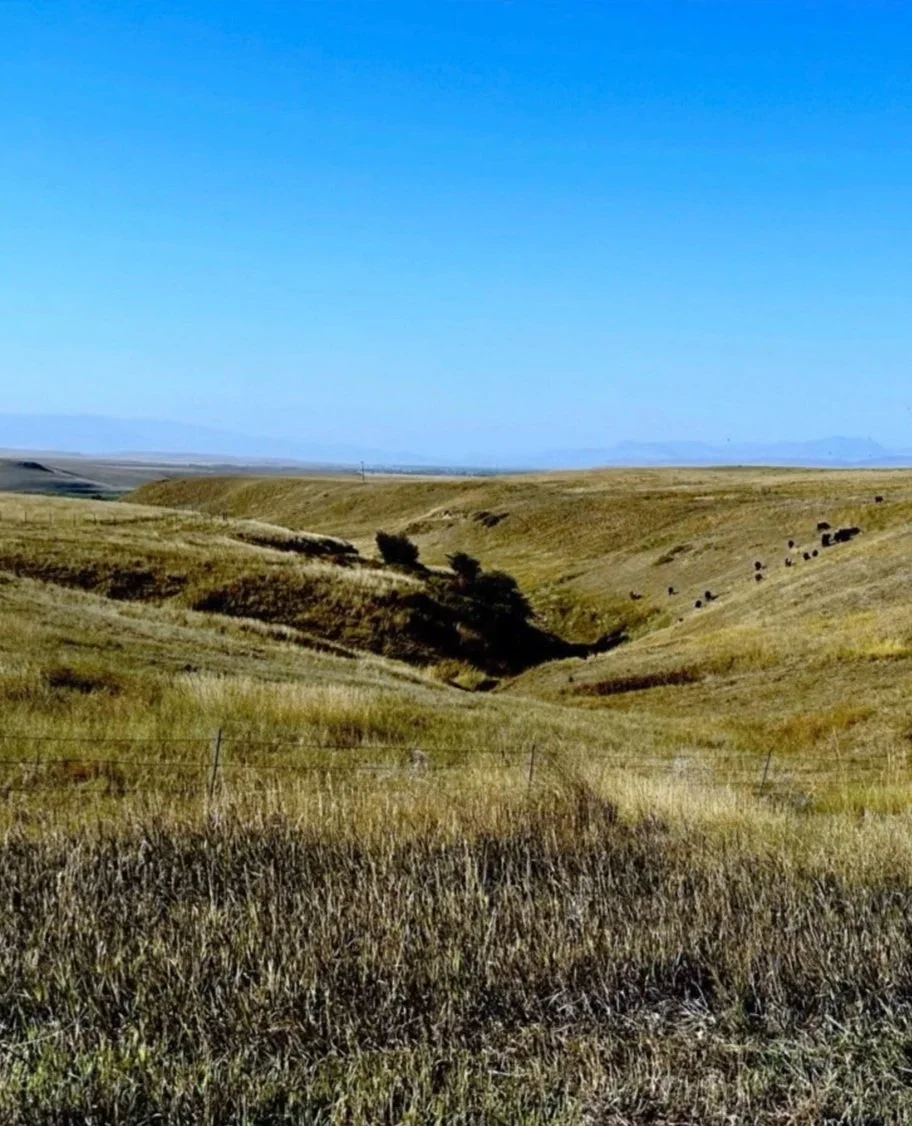
Arnold Swanberg was born in Great Falls in 1948 and spent his adult life in Seattle, but he kept a connection to Montana through two pieces of crop land, one located south of the Great Falls airport and another in Teton County north of Benton Lake. Swanberg was not a farmer. He leased the ground to people who were, and he came back twice a year, in spring and in fall, to check on it. Over the years those people became his friends.
Swanberg died in October 2024. He was 76. He left both parcels, about 480 acres in total and one of the largest donations in the Institute's history, to The Weissman Hood Institute at Touro University in Great Falls, known for most of its 70-plus years as the McLaughlin Research Institute, and his will is specific about the purpose: the land is "to be held as an endowment to fund Alzheimer's research."
"He said, ‘I'm looking at my estate planning here, and I think I'd like to leave those as a long-term benefit to Montana,’" recalls Randy Gray, a retired attorney, former mayor of Great Falls, and Institute board member whose family had been close to the Swanbergs for generations. "He wanted to make sure that this Montana land, the dirt in Montana, was still used for the benefit of Montana."
The Swanbergs were a Great Falls family of lawyers across three generations, but Arnold was the one who chose a different path. After a history degree at the University of Montana in 1970 and service in the Montana Air National Guard, he moved to Seattle to build a life. The Guard left him with a lifelong interest in aviation, which became the project of a lifetime: he set out to photograph a tail number from every unit in the U.S. military, traveled the world to do it, published a magazine on military aviation history, and left the extensive collection of images to the Museum of Flight in Seattle. He also endowed an annual lecture in military history at the University of Montana.
Why brain research, and why in his hometown? Swanberg had seen what dementia does to people close to him, and he wanted research on neurodegenerative disorders such as Alzheimer's disease to happen in Montana rather than somewhere else. He had also followed the Institute for years, largely through his relationship with Gray. What appealed to him was its record of producing scientists who start in Montana, leave to do exceptional work, and stay connected to where they began. Two of those scientists now give the Institute its name. Irving Weissman, born and raised in Great Falls, was the Institute's first high-school intern in 1956, volunteering to clean mouse cages in order to be near the science; at Stanford he became the first scientist to isolate the stem cells that make blood and a leader in the study of stem cell biology. Leroy Hood grew up in Shelby, where he quarterbacked a state-championship team, and went on to help launch the age of genomics and to found fifteen biotechnology companies, Amgen among them. Both got their start on this ground and, decades later, are still tied to it, serving the Institute that carries their names and working to bring what they built back home. That is the circle Swanberg admired: Montana's best and brightest can leave, do brilliant things, and stay rooted. He closed the circle in his own way, with the land itself.
The Institute that produced Weissman and Hood was built at the laboratory bench, on decades of genetics research in mice, and for most of its history that is where its work stayed. Its newest chapter extends from the bench to the clinic, and it is the chapter Swanberg's land will support. That chapter rests on a partnership the Institute had already built with the Touro College of Osteopathic Medicine–Montana and Benefis Health System, which in 2024 became the foundation for the Center for Integrated Biomedical and Rural Health Research (CIB-RHR), funded by the National Institutes of Health. The Center's premise is simple: rural Montanans face the same diseases as everyone else, and some of them more often, but the research on those diseases has almost always been conducted somewhere else. The Center's response is to conduct it here, with laboratories in Great Falls, physicians in training next door, and a health system whose 44 locations reach 94 percent of the state's counties, so that a study can begin at a laboratory bench and end in a clinic in a town like Choteau or Havre without leaving the state. Its first projects focused on diseases that affect rural communities especially hard: Alzheimer's, Parkinson's, age-related vision loss, and chronic wasting disease in the state's deer population.
The Center was built on a conviction that where research happens matters as much as what it finds. In the Institute's view, people trust medical research when it happens where they live and is done by people they might see at the grocery store, and that conviction, more than any other, is why the laboratories are in Great Falls and not in a distant research hub.
Alzheimer's is not a distant problem in Montana. According to the Alzheimer's Association, about 21,000 Montanans over 65 are living with the disease, and the Association counts Montana among the nation's "dementia neurology deserts" because of its shortage of specialists.
Alzheimer's is also a disease around which the Center's scientists have organized much of their work, and they approach it from more directions than one might expect, each resting on a question that can be tested. If some people are genetically more vulnerable to Alzheimer's, their immune systems may respond differently to the disease, and the Center's scientists are examining whether they do. If the proteins that misfold in Alzheimer's also misfold in Parkinson's and ALS, a discovery about one disease may apply to all three, and they are tracing that overlap. If diabetes, which raises the risk of dementia, begins with a misfolded protein of its own, the two diseases may share a mechanism, and they are testing this as well. Even the work on chronic wasting disease in deer belongs to this effort, since it involves the same kind of protein misfolding studied in an animal Montanans know well. The Center's scientists describe Alzheimer's research at the Institute not as a single project but as a way of looking at the aging brain that runs through all their work.
Research of this kind requires people as much as laboratories, and participation is where Montana has the most ground to make up. The state has consistently ranked in the bottom tenth for participation in clinical research, and in 2023 some 17,000 Montanans were caring for a family member with Alzheimer's or another dementia. The Institute's HERO registry, Helping Expand Research Opportunities, was created to close that gap. It is the first clinical research registry in Montana, and more than 600 people have joined, including some who are living with memory loss, Alzheimer's, Parkinson's, ALS, or macular degeneration and, just as important, people with no chronic disease at all, because every study needs healthy participants to compare against. Registering only takes a few minutes. The Institute's view is that joining commits no one to anything; it simply means that when a study opens, Montanans are in line for it.
HERO is one door into the Institute, and there are others: the Big Sky Biomedical seminars, which drew more than 900 people last year, and an internship program that began with Weissman and has since placed more than a thousand students.
The Swanberg land is working land. For now, it will remain that way, farmed by the people who became Arnold’s friends. In keeping with his wishes, what the land provides will go to CIB-RHR's Alzheimer's research, where it can supply the resources and early results that allow Montana scientists to compete on a national and international stage. That, in the Institute's experience, is how a research center in a small city grows: one gift, and one early result, at a time.
Swanberg, by Gray's account, would not have cared much about the attention. Gray does, because he hopes Arnold's example will reach the next person. "I want his name associated with this institution," he says, and he hopes the story plants a seed, as he puts it, in someone who decides that part of what they leave behind belongs here too. The Institute, after all, is going to be here for a long time.
To join the HERO registry, visit HERO Registry. To learn more about the research under way at the Center for Integrated Biomedical and Rural Health Research, visit CIB-RHR. To learn about supporting research at the Institute, including gifts of land or estate gifts like Arnold Swanberg's, visit Contact Us.